De-Icer Mechanism Development
Designing, building, and troubleshooting a gear-driven de-icing mechanism.
The Project
The project involved developing a gear-driven de-icing mechanism through CAD modelling, component selection, and prototype assembly. The design required consideration of component dimensions, assembly requirements, and manufacturing constraints to ensure that the mechanism could be translated from the CAD model into a functional physical prototype. My work focused on developing the mechanical components, preparing the design for manufacturing, assembling the prototype, and evaluating its operation through testing.
Design & Development
The mechanism was developed in SolidWorks with a focus on the arrangement and interaction of its mechanical components. Individual components were modelled and assembled while considering their dimensions, fit, and accessibility within the overall mechanism. Before manufacturing, component dimensions were reviewed to identify potential assembly issues and ensure that the design could be assembled as intended.
Prototype Testing
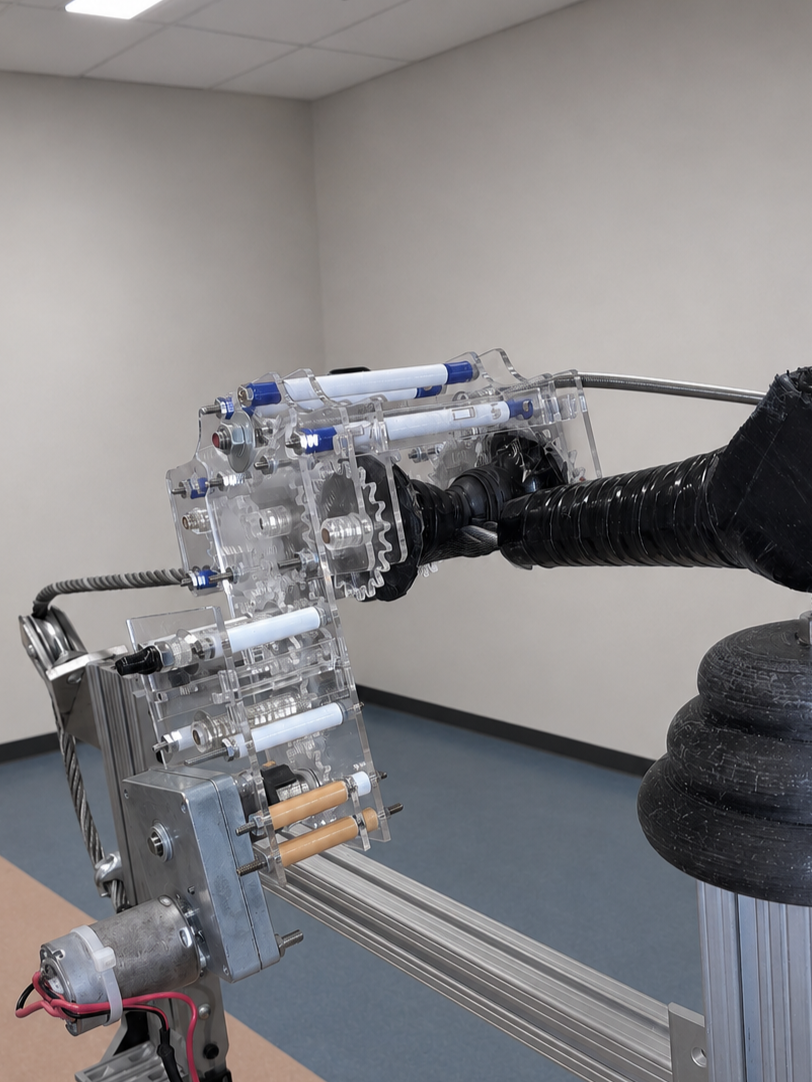
After the components were prepared, the mechanism was assembled into a physical prototype and tested to evaluate its operation. The testing process provided an opportunity to compare the physical behaviour of the mechanism with the expected behaviour from the CAD design and identify issues that were not immediately apparent during the design stage.
De-icer prototype traverses a steel wire
Troubleshooting & Iteration
During testing, the mechanism experienced excessive friction that affected its operation. I investigated the assembly to determine the source of the problem and traced the issue to a machining error affecting one of the components. The affected component was modified to correct the issue, after which the mechanism was reassembled and retested. This process demonstrated the importance of considering manufacturing accuracy and component fit alongside the original CAD design.
Engineering Takeaways
Design for Manufacturing
A successful CAD design must also account for manufacturing accuracy, component dimensions, and assembly requirements.
Troubleshooting
Physical testing can reveal problems that are not obvious from the CAD model. Identifying the underlying cause of a failure is an important part of mechanical design.
Iterative Design
The project demonstrated the importance of modifying, rebuilding, and retesting a mechanism when physical testing reveals an issue.
Final Takeaway
This project gave me hands-on experience connecting mechanical design with manufacturing considerations, prototype assembly, troubleshooting, and iterative improvement.